From the Roman occupation, dated roughly two centuries before Christ, abundant remains have been found, such as the so-called Riópar Hoard, consisting of 364 coins now held in the Albacete Archaeological Museum.
During the Punic Wars there must have been clashes between Romans and Carthaginians. Perhaps Hannibal’s war-elephants, on their way to Saguntum and Italy, followed what is now called the “Hannibal’s Road”, the Roman causeway that crossed the Miraflores valley.
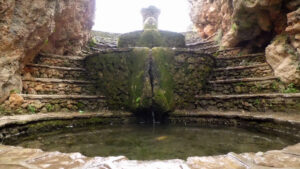
Apparently, Hoyo Guarde (the Cueva de los Chorros) was so named because from there they kept watch for the arrival of their enemies, the supporters of Pompey, after the defeat at Munda.
After the fall of the Roman Empire, the Visigoths occupied Riópar, settling in an early Roman camp and on the Picos del Oso. During the Arab invasion the area belonged to the Tāʾifah of Tudmir, at first retaining a certain independence until it came under the Caliphate of Córdoba.
Little documentation survives from the period of Arab rule, although the eleventh-century chronicler Al-Zuri describes "Almisawanis", which seems to refer to the source of the River Mundo.
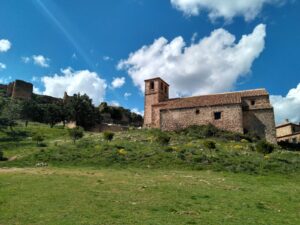
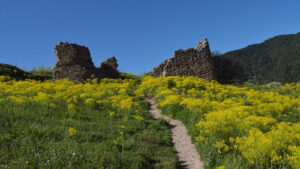
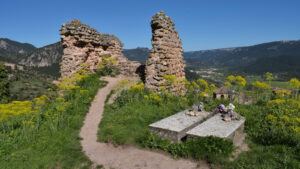
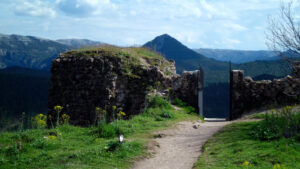
The reconquest was carried out by Alfonso VIII the year after the Battle of Las Navas de Tolosa. In 1213, following the capture of Alcaraz, his forces seized Riópar Castle, which became the independent municipal council closest to the Kingdom of Murcia. It retained its independence until July 1256, when Alfonso X assigned it to the powerful Alfoz de Alcaraz to ease its defence.
It endured various Arab raids until the late fifteenth century, a time of numerous disputes between the lordships of Navas de Paredes and Villena.
When, in 1436, John II granted Don Rodrigo Manrique the Lordship of the Five Towns, he excluded the castles of Riópar and Cotillas, which Don Rodrigo coveted to block Alcaraz’s route southward.
Later, when the struggle for the mastership of the Order of Santiago arose between the Marquisate of Villena and the Counts of Navas de Paredes, Riópar became the coveted prize of the new master, Don Pedro Manrique, elder brother of the poet Jorge, famed for his elegiac verses on their father’s death.
On learning that the people of Riópar, dissatisfied with the Villenist governor Pedro Montoya, had risen against him, Don Pedro immediately dispatched the governor of Segura with fifteen mounted lances and 150 foot soldiers to aid the rebels.
Yet, with Montoya entrenched in the castle, he could not capture it with so small a force, so he opted for a siege, summoning troops from Siles, Segura de la Sierra, Yeste, Villapalacios, Villaverde, Cazorla and Úbeda.
The siege lasted seven months, during which Don Pedro, besides his own vassals, hired 500 infantry and 100 cavalry mercenaries, which, he claimed, cost him twelve million maravedís.
Alfonso Montoya, despairing of relief, surrendered in exchange for immunity for himself and his followers and 250,000 maravedís. Don Pedro was fortunate that the conquest coincided with the war between the supporters of “La Beltraneja” and the Catholic Monarchs, which he exploited to persuade the monarchs that his action was inspired by loyalty to them.
Salazar y Castro recounts it thus: “…and when the Marquis of Villena and several knights in the retinue of the King of Portugal had occupied the towns of Riópar, Cotillas and San Vicente (La Vegallera), which were part of the district of Alcaraz, he set upon those strongholds and, seizing them by siege, garrisoned them with his troops and exercised their jurisdiction until the Kings should ordain otherwise.”
In 1477 the Catholic Monarchs granted him the towns of Riópar and Cotillas for two lifetimes, stipulating that they revert to Alcaraz upon the death of Don Pedro’s son, provided Alcaraz reimbursed the Manrique family the twelve million maravedís that Don Pedro claimed to have spent on the conquest.
Thus, in 1536, on the death of the third Count of Paredes, Alcaraz claimed Riópar, and Emperor Charles I assented, provided the costs of conquest were paid—sparking a lawsuit over the amount. Because Alcaraz refused payment, it failed to regain Riópar until the abolition of the lordships in the nineteenth century.
In 1746 the Count of Paredes sold his Lordship of the Five Towns to the Count of Navas de Amores, a newcomer to the nobility. The townspeople soon disputed his rights owing to abuses over pastures and taxes. During these years, Riópar experienced considerable depopulation, recording only 46 taxable households and thirteen paupers—59 households in all.
The Count of Navas de Amores enjoyed his rights until 1811, when the Cortes of Cádiz decided to incorporate Riópar into the Crown.
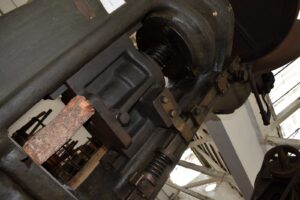
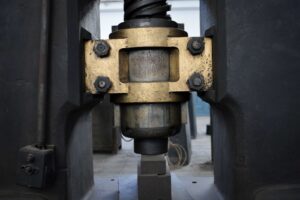
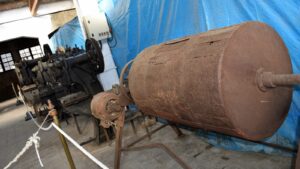
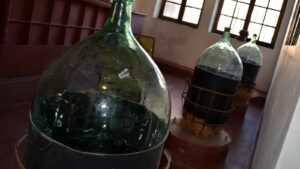
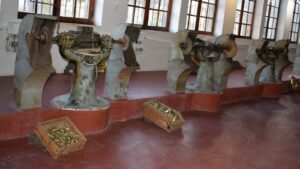
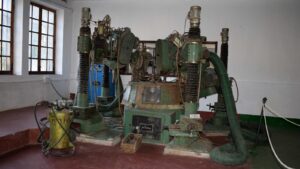
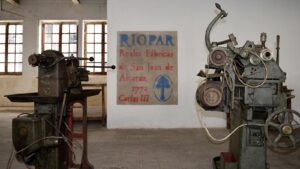
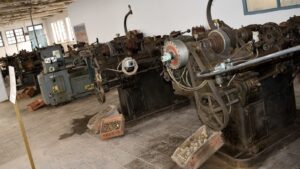
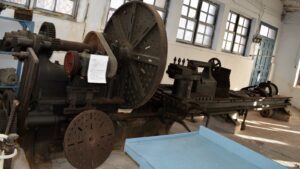
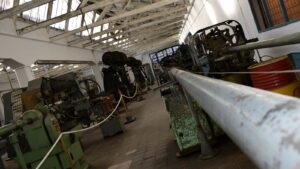
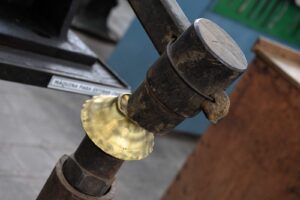
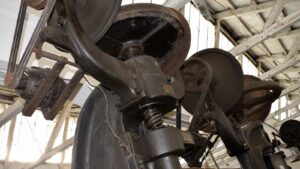
From 1772 onward, however, old Riópar yielded prominence to the Fábricas de San Juan de Alcaraz, whose fortunes would be bound to the metallurgical works founded by Juan Jorge Graubner.
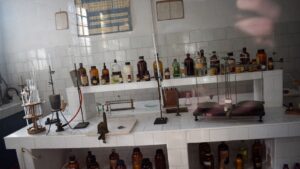
History of the San Juan de Alcaraz Factories
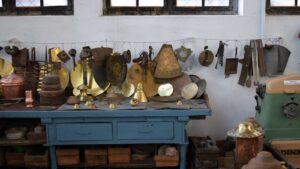
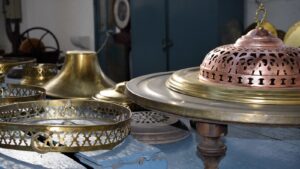
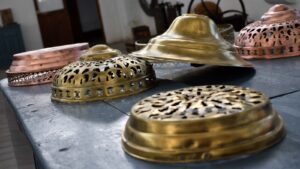
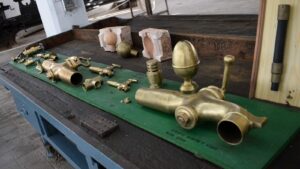
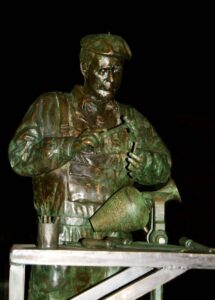
It all began long ago, in the second half of the eighteenth century, when a shrewd Viennese engineer named Juan Jorge Graubner reached Riópar, lured by reports of a calamine mine—the ore from which zinc is extracted, which, combined with copper, produces brass.
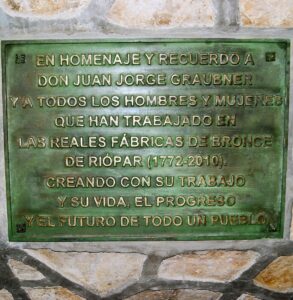
Juan Jorge Graubner arrived in Madrid in 1758 at the age of 22. After thirteen years of metallurgical inventions and machinery for diverse purposes, he first visited Riópar in 1771 to inspect the mine. From then on, Riópar’s history became inseparable from that of its factories.
Graubner returned to Madrid full of ambitious plans. At Court he found a receptive king in Charles III, who quickly recognised the benefits Spain could reap. The monarch promptly granted him the first privileges and exemptions, and the factories were officially founded by Royal Decree on 19 February 1773.
The Riópar Factories thus became the first established in Spain and the second worldwide, for at that time only those of Goslar (Hanover, Germany) existed.
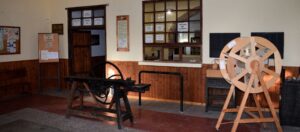
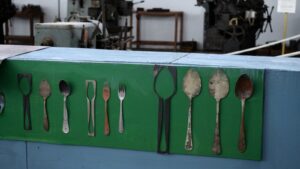
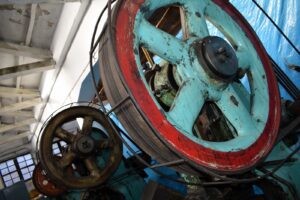
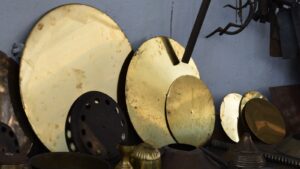
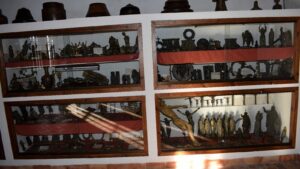
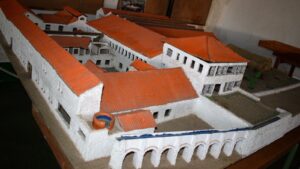
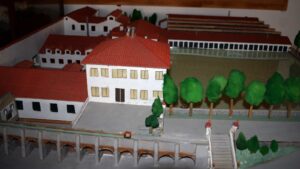
Graubner decided to set up two production centres: one, San Juan, beside the Arroyo del Gollizo (El Royete), to manufacture brass objects, and the other, San Jorge, beside the River Mundo and just below the mine, where all the wrought-copper work and zinc extraction would take place.